

9 Days Maasai Mara & Serengeti Migration Safari
Two countries, two riverbanks, one chance to watch the herds take the plunge
9 Days Maasai Mara & Serengeti Migration Safari
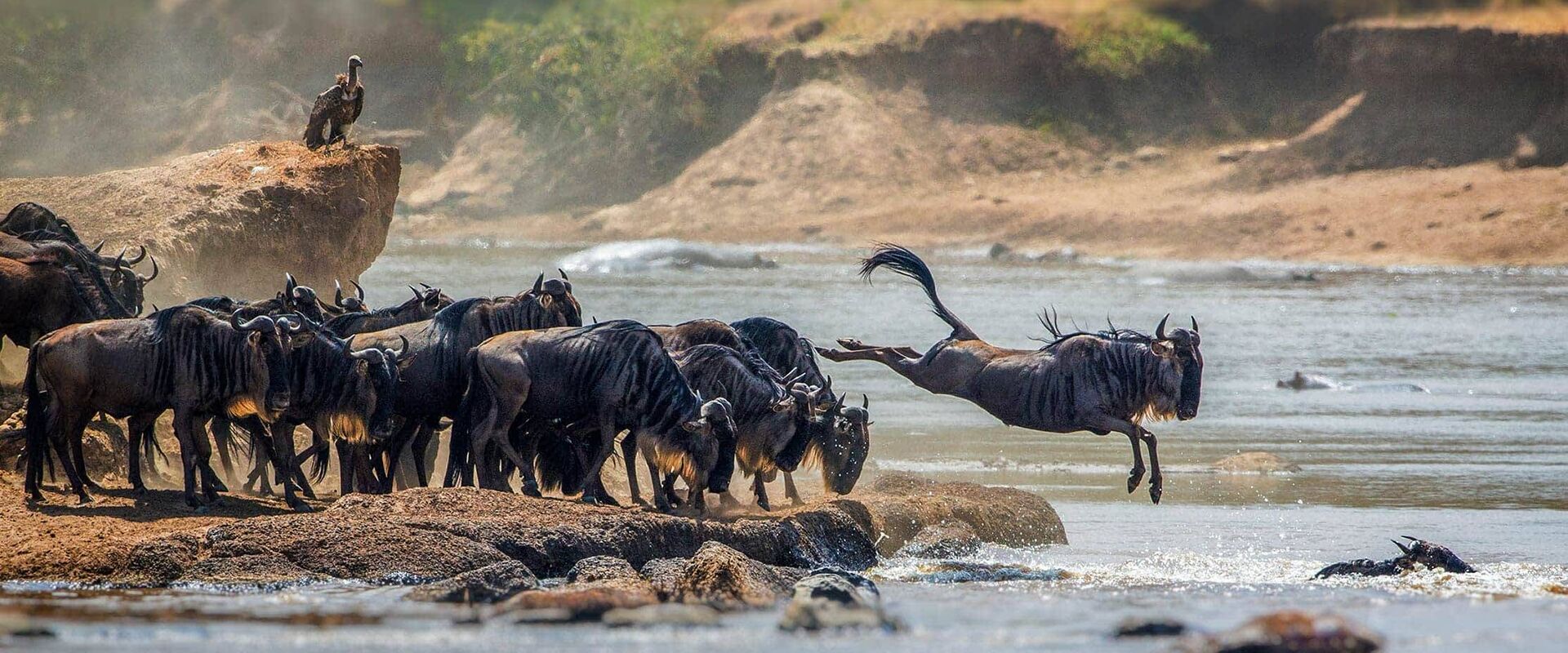
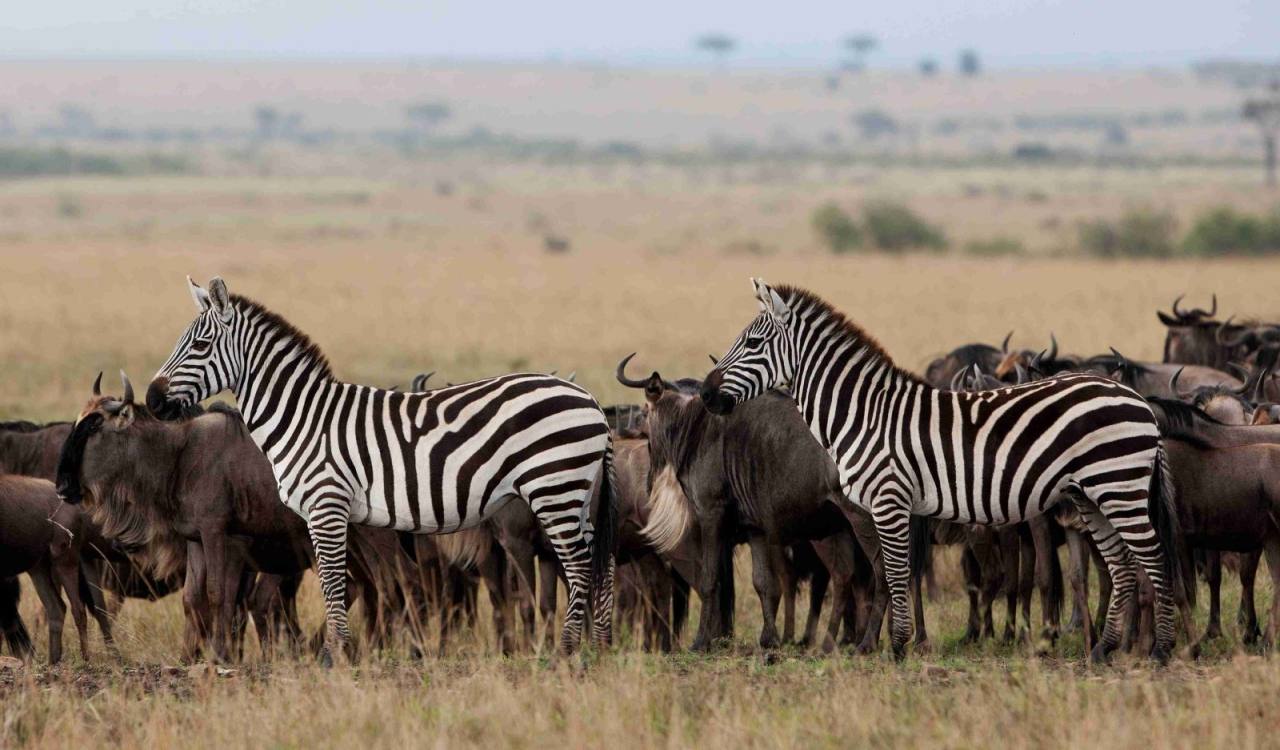
Every dry season, more than a million wildebeest, with zebra and gazelle in tow, press north to the Mara River and face the same problem: the fresh grass is on the other side. What follows is the most nerve-shredding spectacle in African wildlife. Herds bunch on the bank for hours. One animal jumps. Then thousands pour down the slope into brown water where crocodiles wait and lions watch from the far side.
This safari puts you on that river twice. You begin in Kenya's Maasai Mara, with three nights among the reserve's famous lion prides, cheetah and leopard, and the option to drift over the plains in a hot-air balloon at sunrise. Then a light aircraft hops you across the border to the northern Serengeti, where the same river bends through hilly country that sees a fraction of the vehicles. Crossings here can feel almost private: just your guide, the dust and the drumming of hooves.
From the north you drive south through granite kopjes to Seronera, the Serengeti's big-cat heartland, and finish with a dawn descent into Ngorongoro Crater before heading to Arusha. Nine days, two countries, five days within reach of the river, and the best odds we know of seeing the herds go.
Ideal for: Wildlife lovers who want the strongest odds of seeing wildebeest and zebra hurl themselves into the Mara River, on both sides of the border.
The journey in brief
You land in Nairobi and rest for a night before a morning flight to the Maasai Mara. Three days follow on the Kenyan side: long sessions on the Mara River waiting for crossings, big-cat drives across the open plains and an optional sunrise balloon flight. On day five a light aircraft carries you via Migori across the border to Kogatende in the northern Serengeti, where two more days on the river come with far fewer vehicles. A long, game-rich drive then takes you south to Seronera for a night among the kopjes, before you climb into the Ngorongoro highlands. The final morning starts in the dark with a descent to the crater floor for rhino, lion and flamingo, and ends with the drive to Arusha and your flight home.
Highlights
Day by day
Nairobi, the Night Before the River
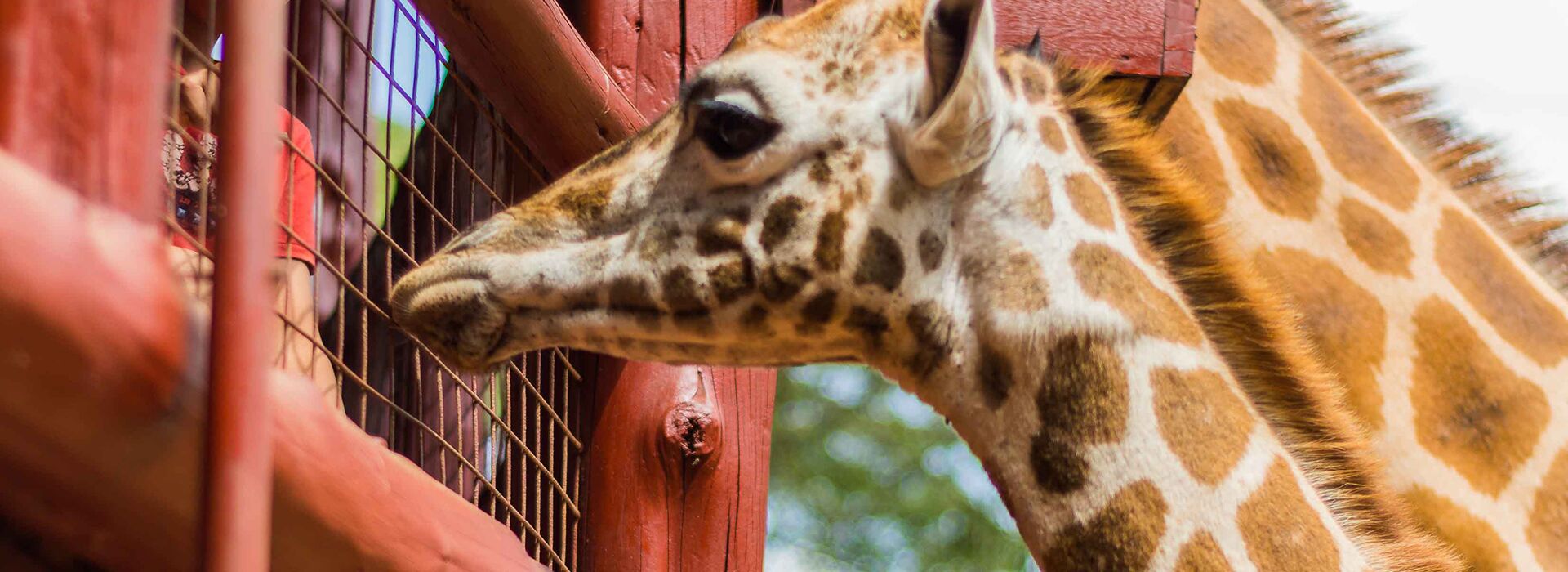
A Geob Ventures representative is waiting in the arrivals hall at Jomo Kenyatta International Airport, sign in hand, and handles the drive into Nairobi. The rest of the day is yours to shake off the flight. If you land early, the city has good distractions: orphaned baby elephants at their late-morning mud bath on the edge of Nairobi National Park, or the carved doors and old photographs of the Nairobi National Museum. In the evening your guide drops by to brief you, checks your bags against tomorrow's 15 kg light-aircraft limit and answers the question everyone asks: will we see a crossing? The honest answer is that nobody can promise one, but this route gives you two long stretches of river to try.
Into the Mara by Light Aircraft
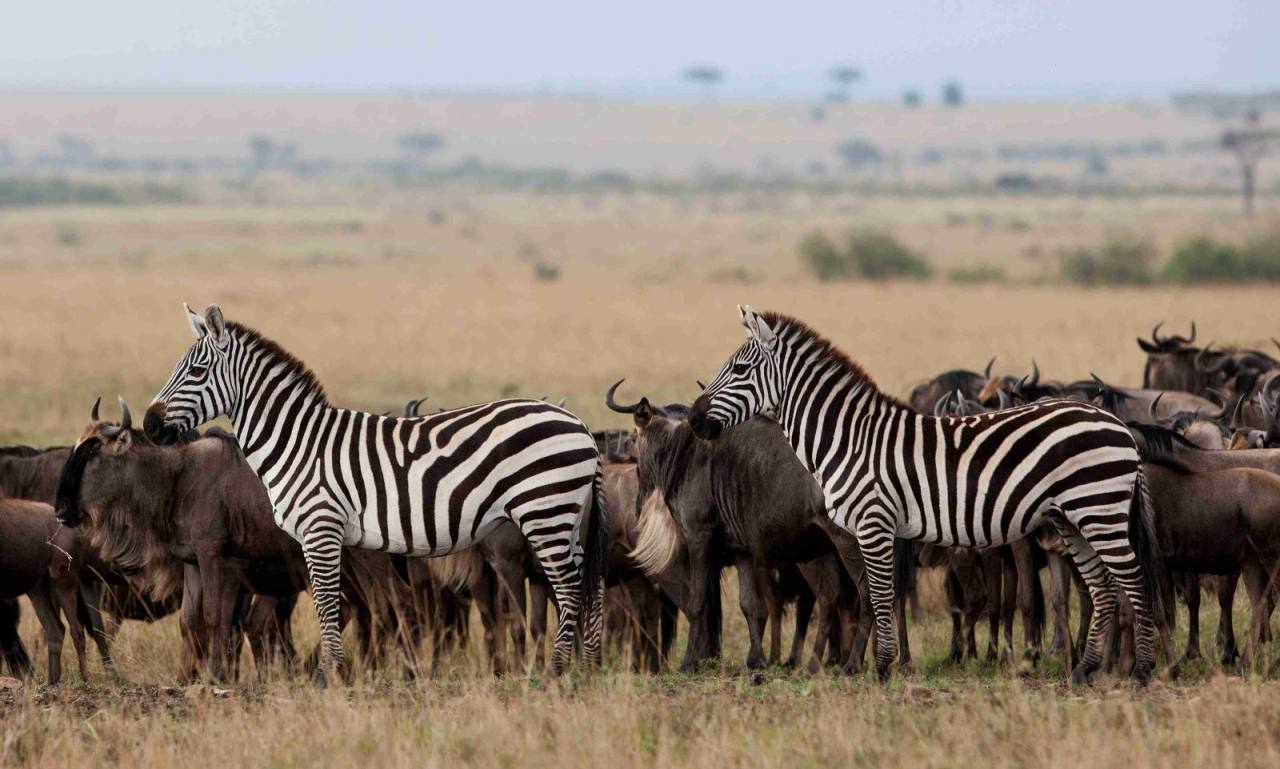
After breakfast you're driven across town to Wilson Airport, Nairobi's busy hub for small planes. The flight to the Maasai Mara takes about an hour, low enough to watch the Rift Valley fall away beneath you and the wheat fields give way to open, tawny grassland. Your guide meets you on the airstrip with a pop-top 4x4, cold water and binoculars. Between July and October the plains are striped with wildebeest grazing in long columns, and the predators are well fed and close by. Lunch, a pause through the hottest hours, then out again in the late afternoon as the light softens and the lions begin to stir.
A Day on the Riverbank
Today belongs to the Mara River. You leave early with breakfast and lunch packed, so there's no need to break off and miss the moment. Your guide reads the herds: where they're massing, which crossing points have been used this week, whether the lead animals look committed or skittish. Then you wait, engine off, sometimes for hours. It's tense, quiet and strangely absorbing. When the first wildebeest commits, the bank erupts in dust, bellowing and spray, and crocodiles slide out into the current. Some days the herds turn back at the last second. Either way the river is never dull, with hippos grunting in the pools below and vultures circling overhead.
Balloons, Big Cats and the Long Grass
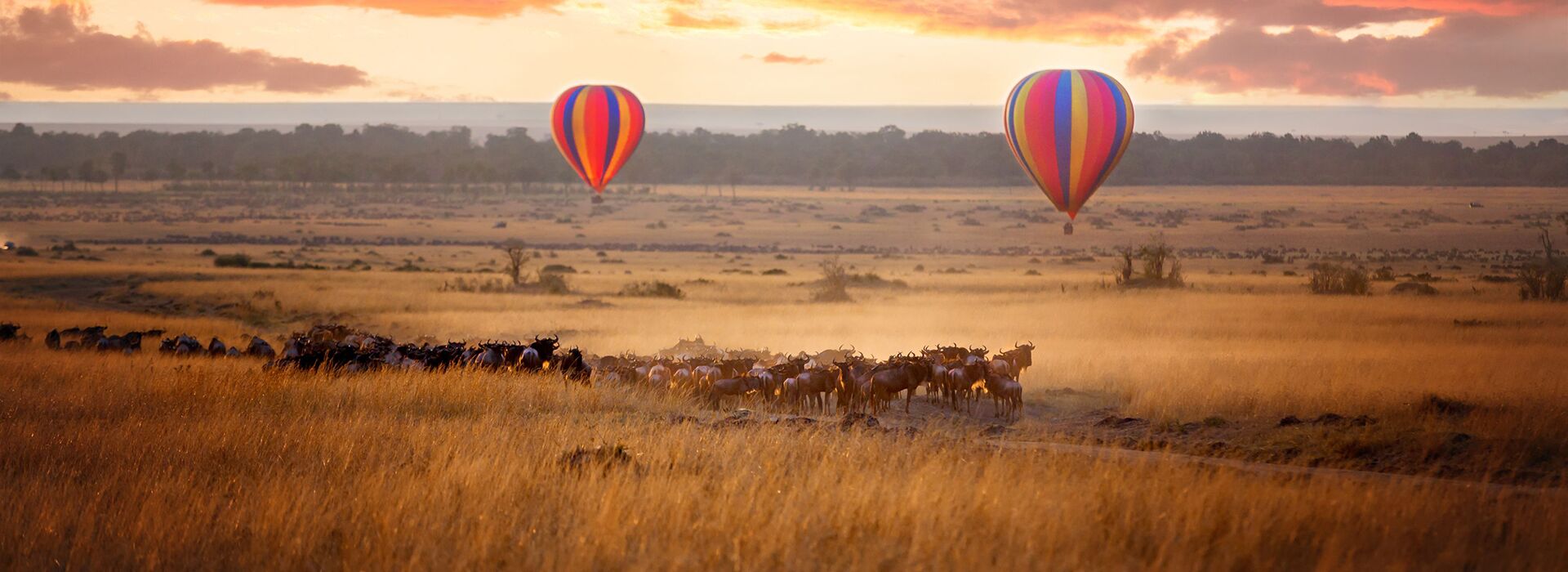
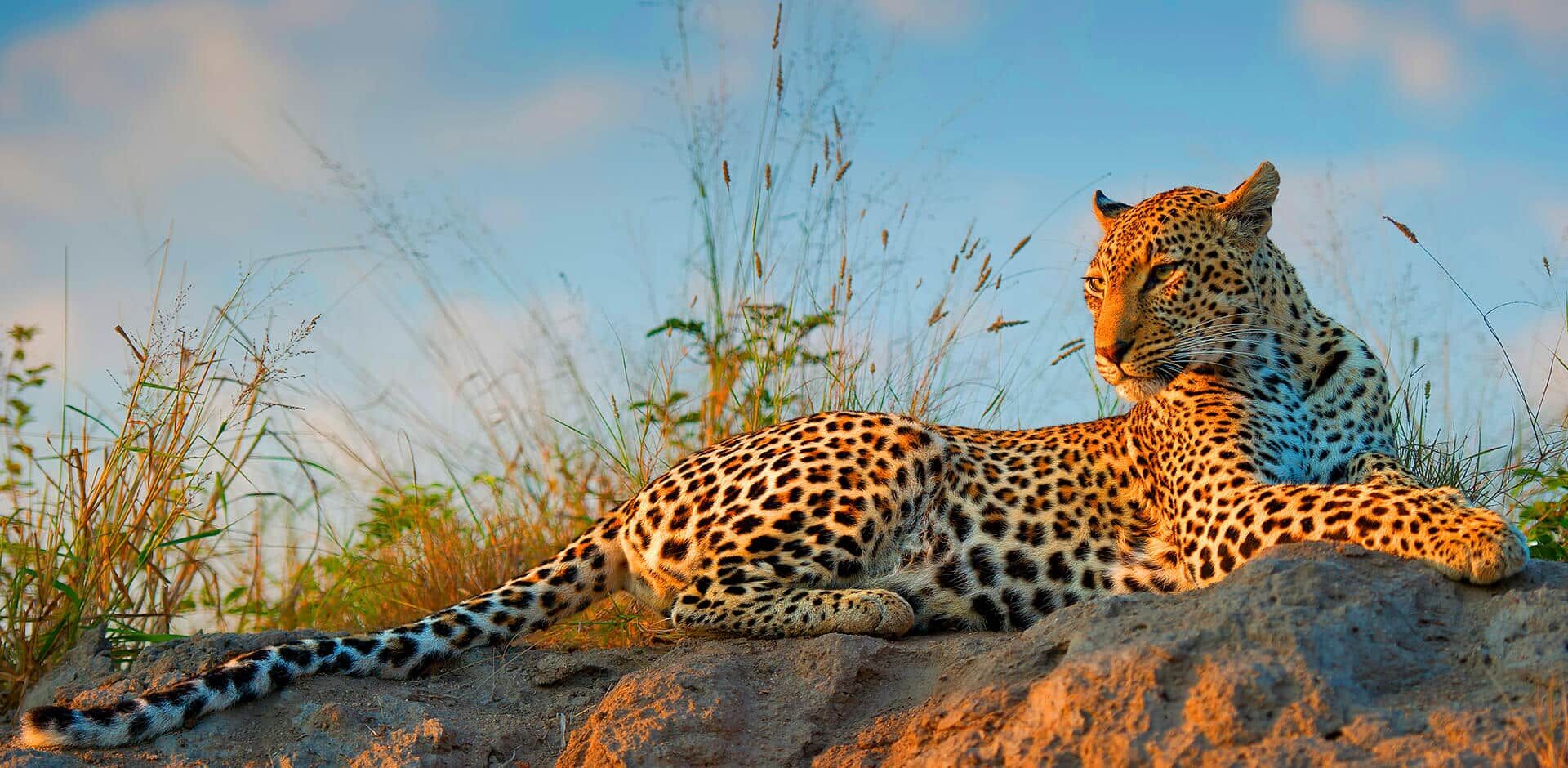
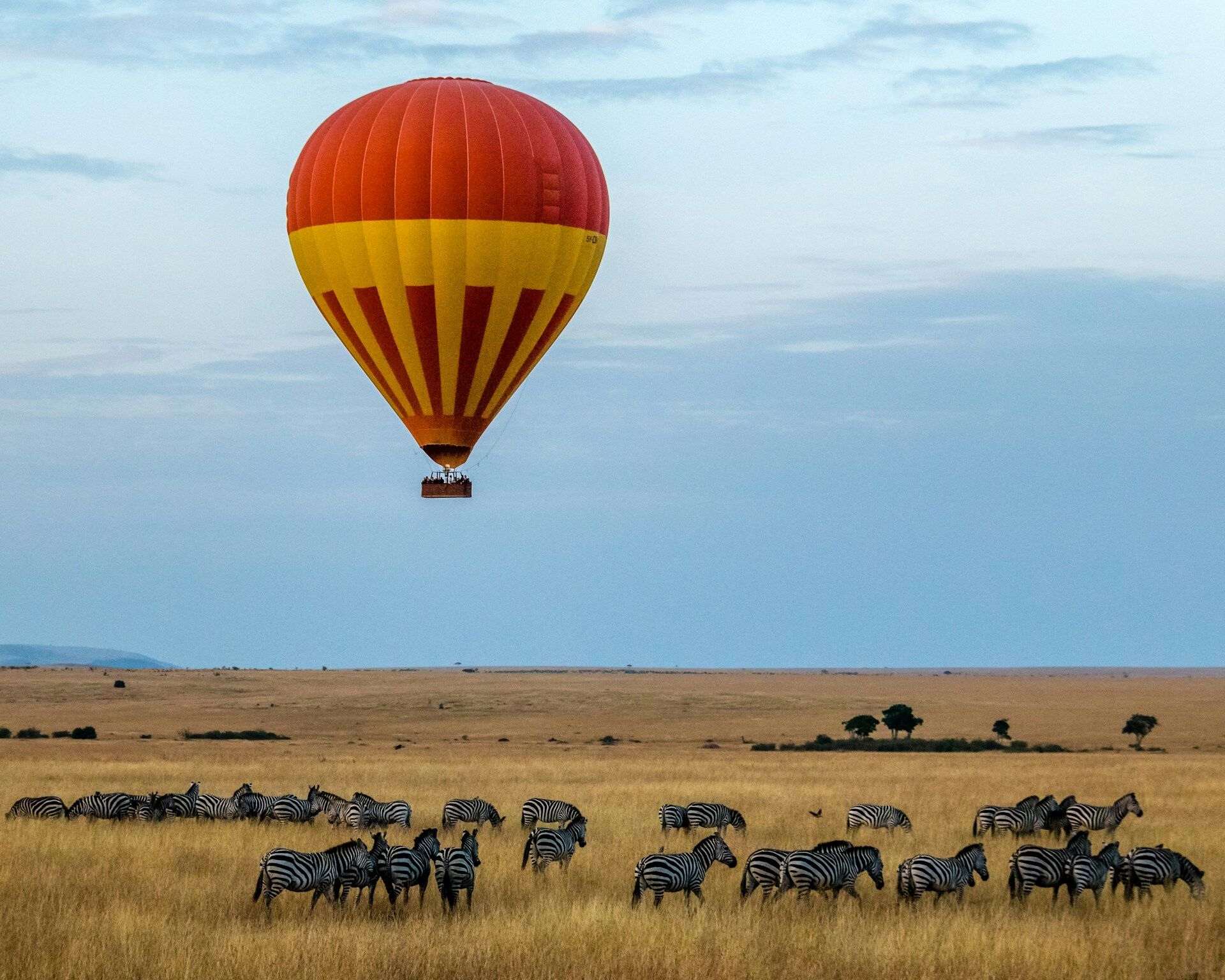
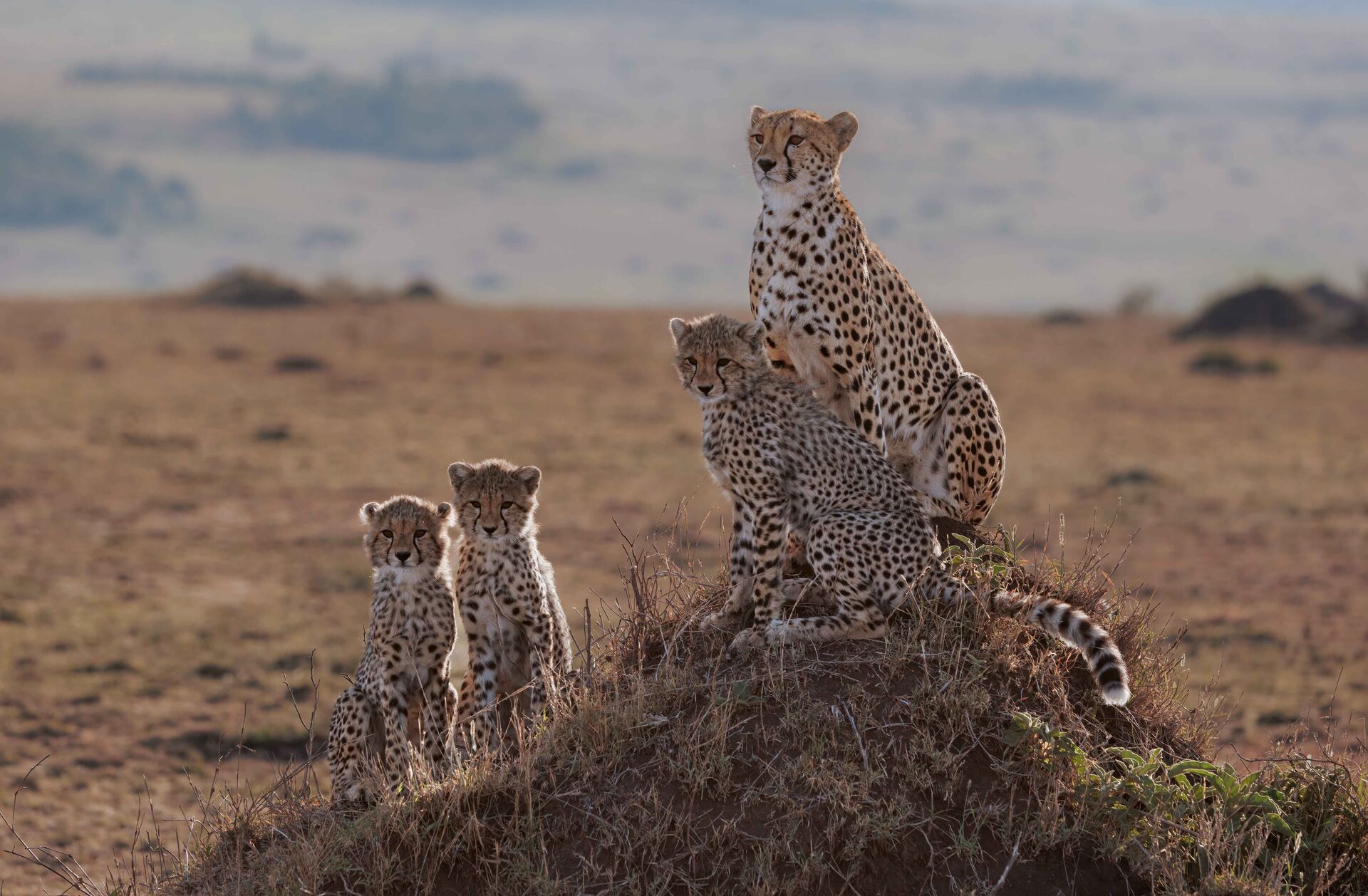
Early risers can lift off before dawn on an optional hot-air balloon flight, drifting for about an hour over the plains as the sun clears the escarpment, then landing for a bush breakfast in the grass. Everyone else enjoys a slower start. The rest of the day is for the Mara's predators. Your guide knows the territories of the local prides, the cheetah that use termite mounds as lookouts and the leopard that favours a particular fig tree along a dry riverbed. You might spend an hour with a single cheetah as she studies a herd of Thomson's gazelle. Between sightings come elephants, topi standing sentry on their mounds and giraffe outlined against the western ridge.
Over the Border to Kogatende
A final morning drive, then you fly a short hop to Migori, close to the border, to clear Kenyan exit formalities. Back on board, you cross into Tanzania, complete entry formalities on the way and land at Kogatende in the far north of the Serengeti. Your Tanzanian guide meets you at the airstrip; Kenyan safari vehicles can't operate in Tanzania's parks, so the handover is built into the plan. The landscape changes at once: rolling hills, scattered granite outcrops and the Mara River again, here running between rocky banks. Your afternoon drive follows the water, where crocodiles lie motionless on sandbanks that may soon be very busy.
The Quiet Side of the Crossing
The Serengeti's northern corner has the same river, the same herds and a fraction of the traffic. Crossing points are scattered along a long, winding stretch of water, so when the wildebeest start to move you may share the scene with only a few other vehicles, sometimes none at all. Your guide works the riverbank with patience, shifting between crossing points as the herds drift up and down. Between waits, look for lions that have learned to ambush exhausted animals scrambling out of the water, and for the hippos that refuse to give up their deep pools. A packed lunch under a shady tree keeps you close to the action all day.
South Through the Kopjes to Seronera
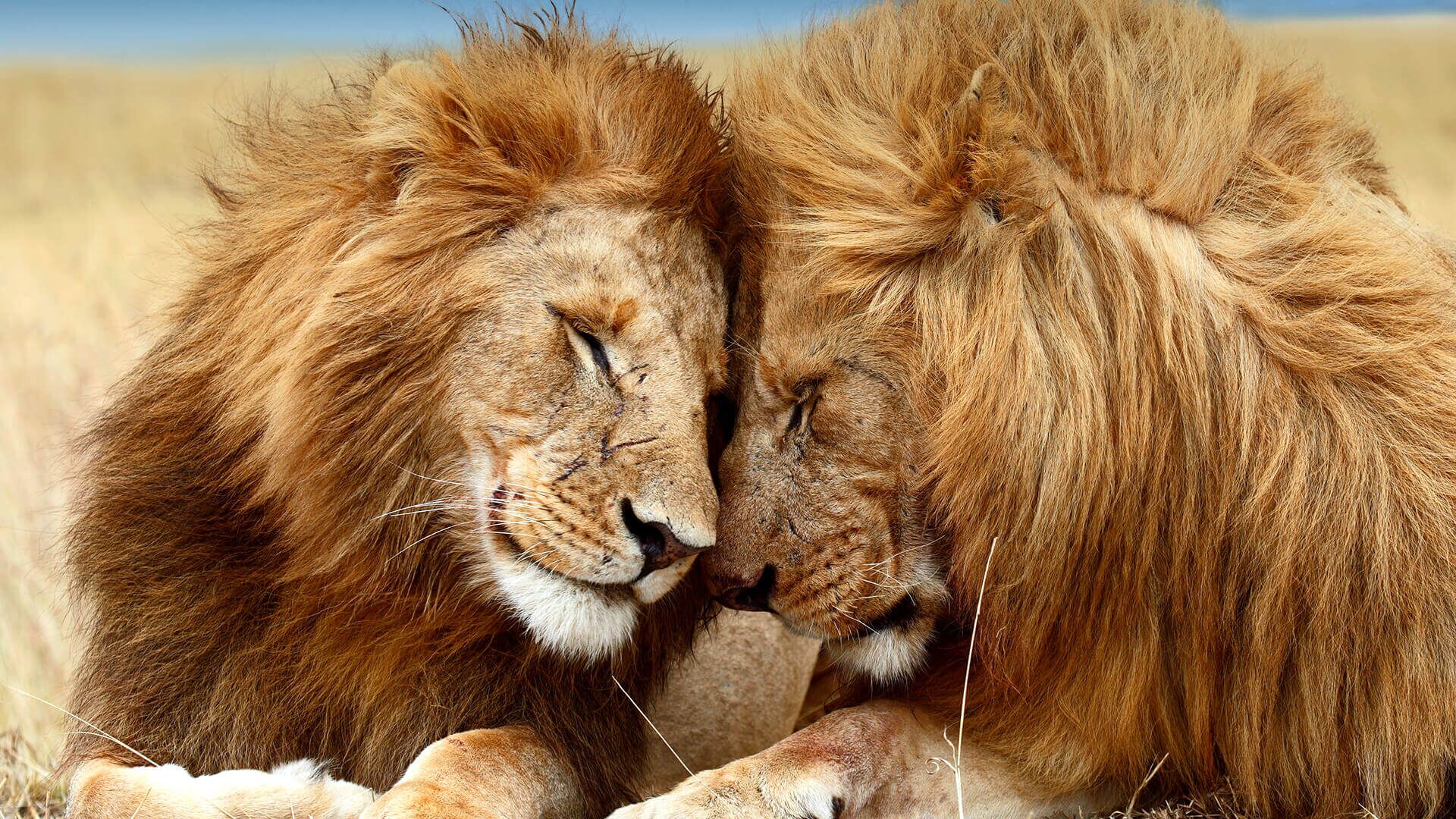
Today you drive the Serengeti from top to middle, a journey of five to six hours that is really one long game drive. The track runs south through wooded hills and open valleys, past granite kopjes where klipspringer balance on the boulders and lions sprawl in the shade of the rocks. Expect elephant and buffalo in the north, then the classic open plains as you near Seronera. The Seronera River valley is the park's year-round predator hub, its sausage trees and yellow-barked acacias offering ideal leopard perches. You arrive in time for a short late-afternoon drive before dinner. If you'd rather save the hours, a light-aircraft hop can replace the road.
Up to the Crater Rim
One more early drive around Seronera, when the cats are most active and the plains are cool. Then you head southeast across the short-grass plains to Naabi Hill, leave the national park and climb into the Ngorongoro highlands. Time allowing, you stop at the edge of Olduvai Gorge, where fossil finds reshaped our understanding of human origins. Maasai herders move cattle across the grassy slopes as the road rises into cooler air and montane forest. By late afternoon you're on the rim of Ngorongoro Crater, about 600 metres above its floor, watching cloud shadows slide across it. Bring a warm layer: evenings at this altitude are cold.
Crater Floor, Then Homeward
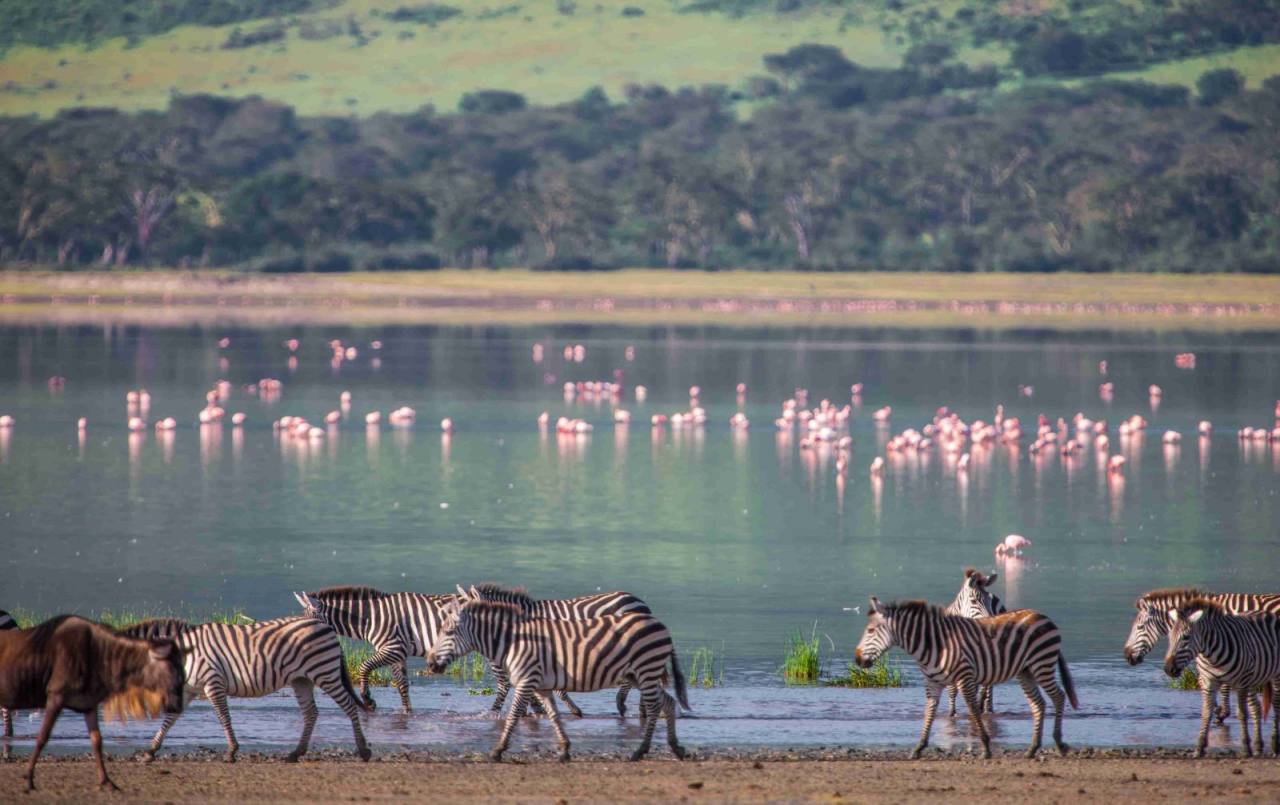
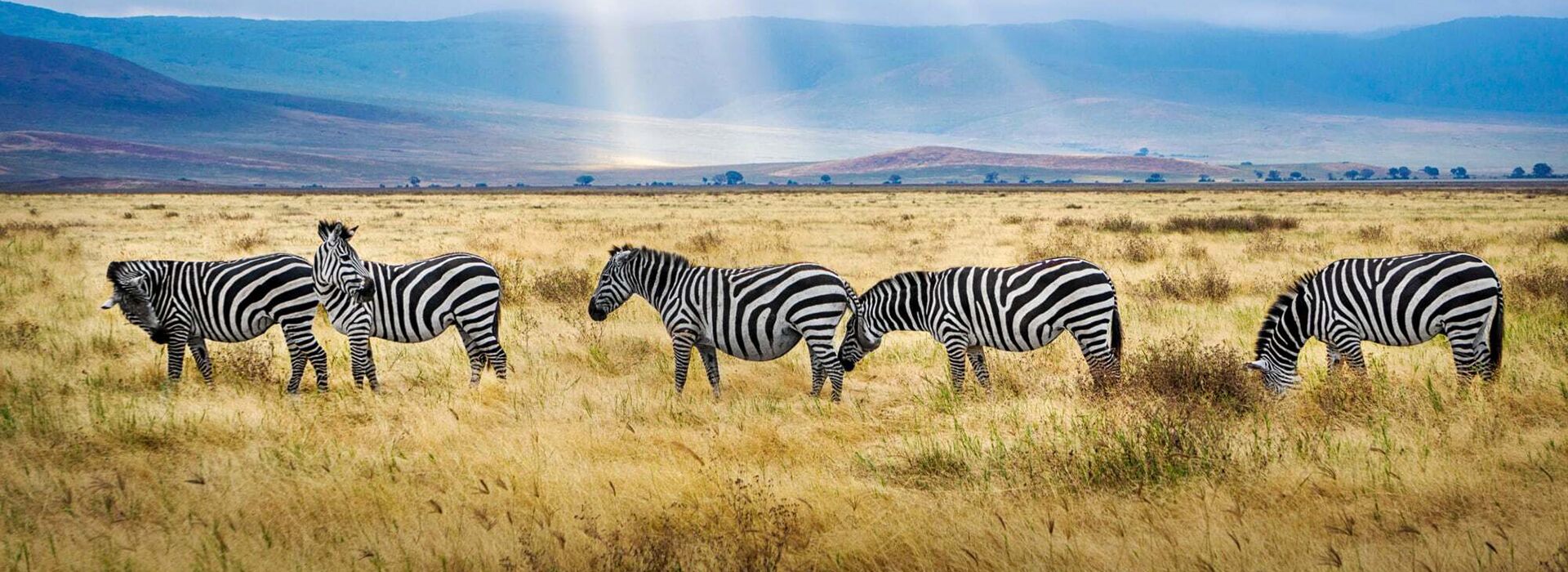
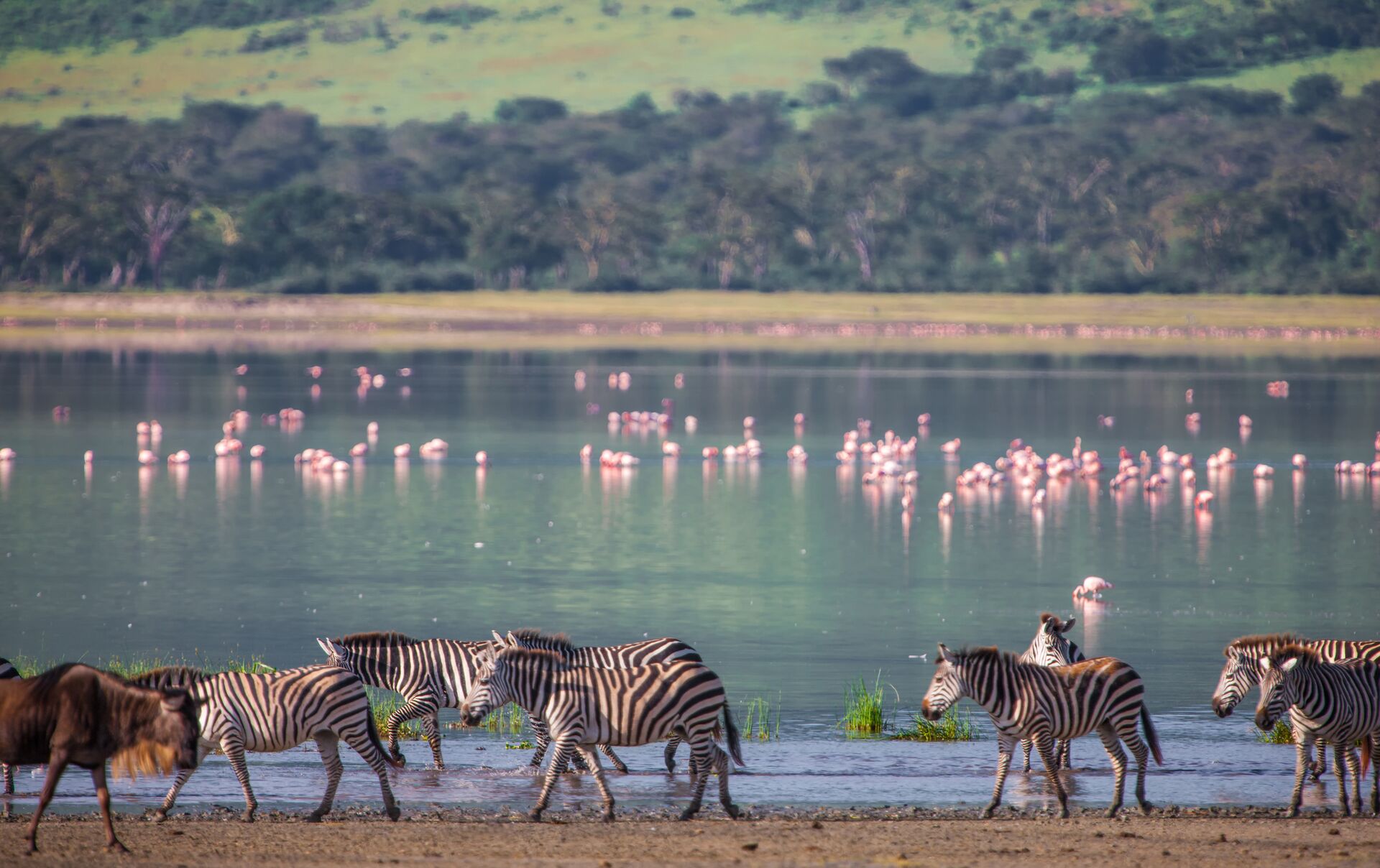
Breakfast is early and the descent road opens at dawn, so you reach the crater floor while it's still cool and quiet. Ngorongoro is a collapsed volcano whose walls enclose grassland, swamp, a soda lake and a forest of fever trees. Black rhino graze in the open, lions doze near the marshes and flamingos fringe the lake when water levels suit them. After a picnic lunch beside a hippo pool, you climb out and drive about three and a half hours to Arusha. Your guide then takes you to Kilimanjaro International Airport for an evening flight, or into town if you're staying on in Tanzania.
Your route
The parks, lakes and towns you'll travel through, in order.
What's included
Prices
Book as a group and the saving is applied to your quote.
Rates are per person per day, sharing a room, and cover everything under what's included. Your tailored quote confirms the final price for your dates. International flights are not included.
Frequently asked questions
Are river crossings guaranteed?
When exactly should I travel?
Which visas and documents do I need?
How much luggage can I bring on the light aircraft?
Can I fly from the northern Serengeti instead of driving south?
How long is the 9 Days Maasai Mara & Serengeti Migration Safari?
How much does the 9 Days Maasai Mara & Serengeti Migration Safari cost?
When is the best time to do the 9 Days Maasai Mara & Serengeti Migration Safari?
What is included in the 9 Days Maasai Mara & Serengeti Migration Safari?
Can this itinerary be customised?
Let's plan your safari
9 Days Maasai Mara & Serengeti Migration Safari · 9 days
Tell us when you'd like to travel and who's coming. A Geob safari specialist in Nairobi will reply within one working day with availability, a tailored quote and any changes you'd like.
- No account or payment needed to enquire
- Every itinerary can be adjusted to your dates and pace
- Prefer to talk? +254 728 136 167
You might also like
 14 days
Best seller
14 days
Best seller
14 Days Kenya & Tanzania Big Five Safari
Fourteen days and seven great parks, from Samburu's desert rivers to Tarangire's baobabs
 6 days
6 Days Maasai Mara & Serengeti Fly-in Safari
Six days, four flights, almost no road: the Mara, Serengeti and crater for people short on time
 12 days
12 Days Kenya & Tanzania Photography Safari
Private vehicle, specialist guide and every drive timed for the best light