

13 Days Kilimanjaro Climb & Safari
See Kibo from Amboseli, climb it via Machame to Uhuru Peak, then rest your legs in the crater
13 Days Kilimanjaro Climb & Safari
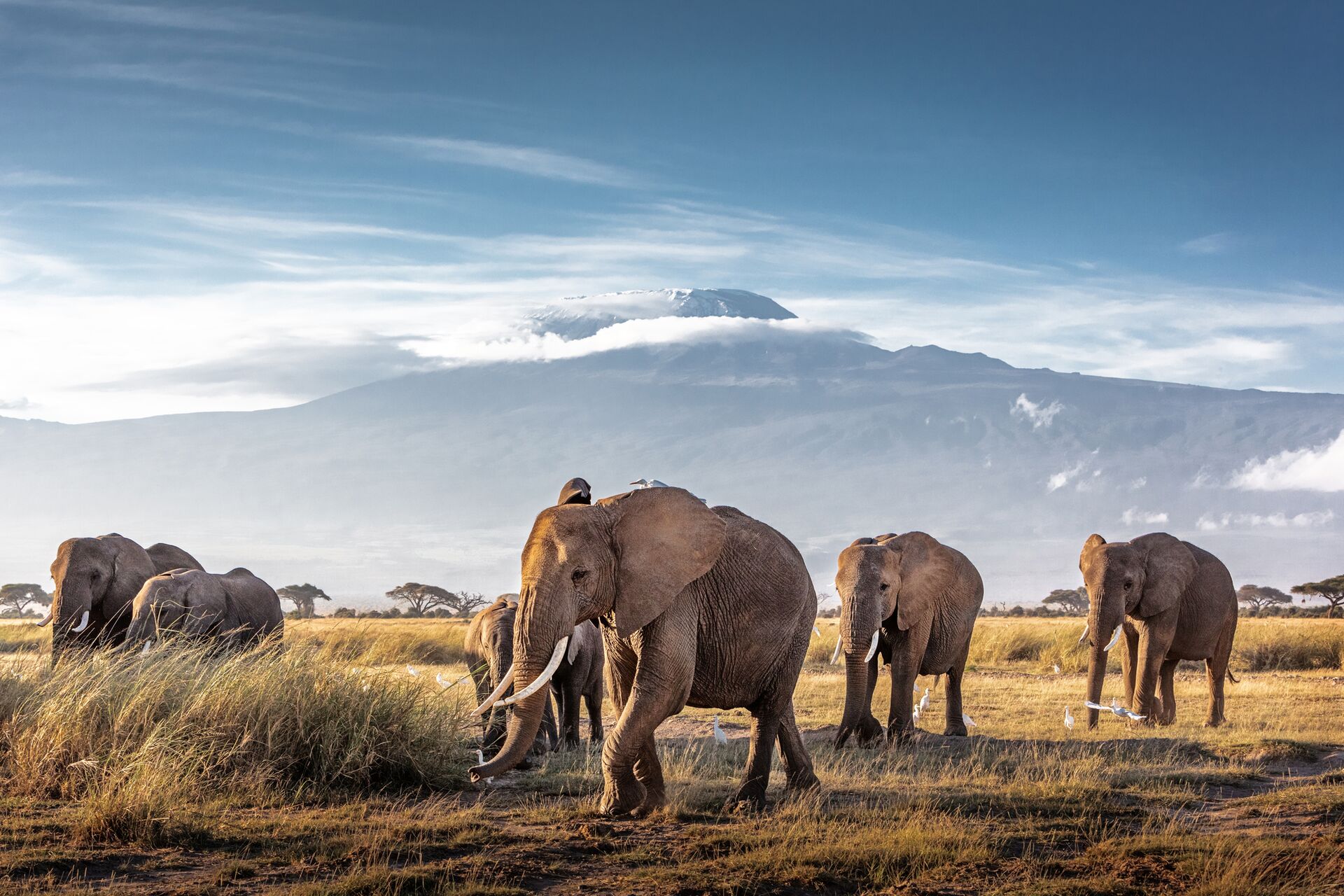
You meet the mountain before you climb it. Two days in Amboseli put Kilimanjaro's snowy bulk on the horizon every morning, framed by elephants wading through green swamps fed by its filtered meltwater. By the time you cross the border at Namanga and reach Arusha, you know exactly what you are up against.
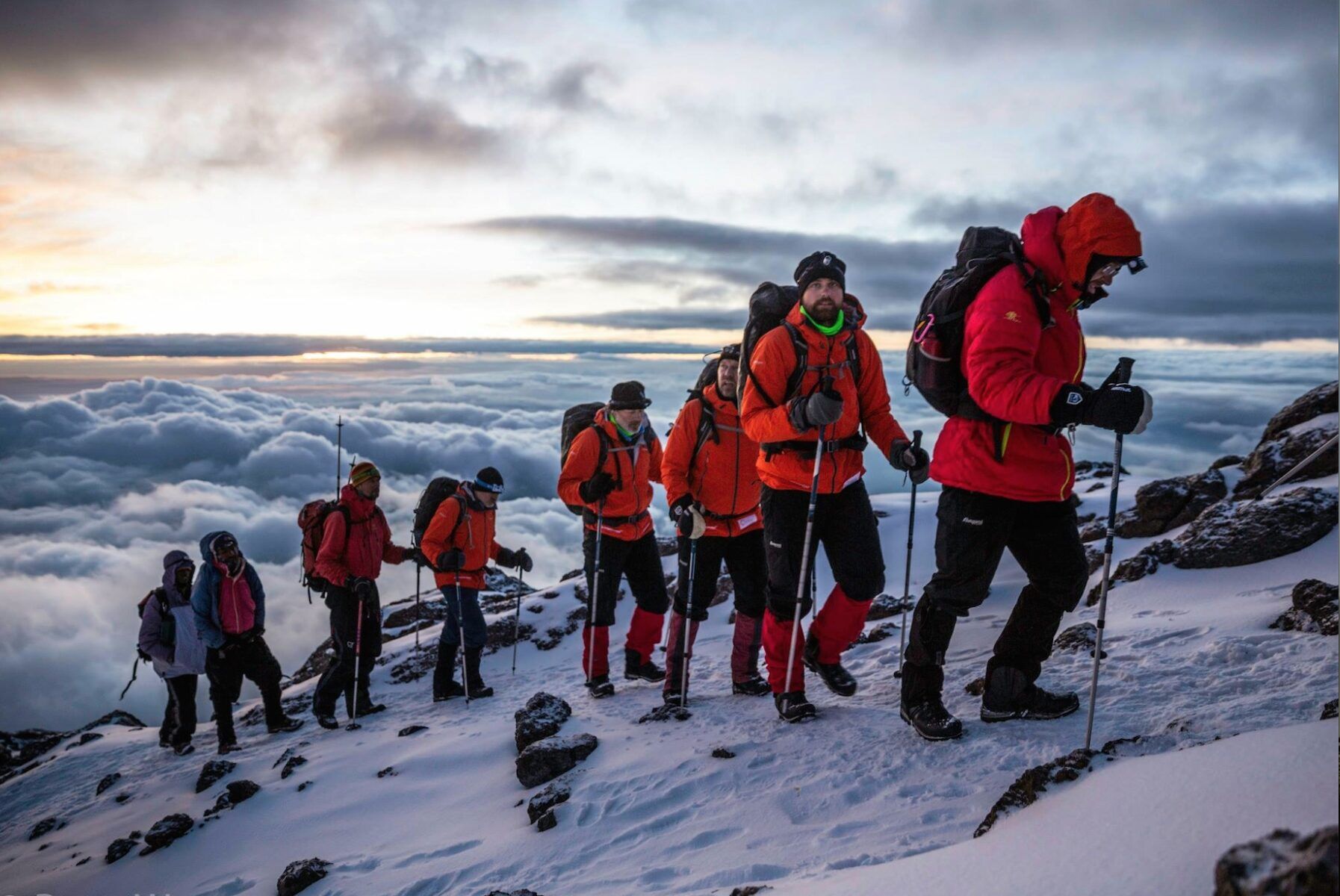
The Machame route is one of Kilimanjaro's most scenic ways up. Over six days you climb from moss-hung rainforest through giant heather to the high Shira Plateau, touch 4,600 metres at the Lava Tower, scramble up the Barranco Wall and traverse to the last camp at Barafu. A professional crew of guides, cooks and porters carries the load, feeds you well and checks your health every day. Then comes summit night: hours of slow steps by headtorch, until the sun rises over the ice fields and you stand at Uhuru Peak, 5,895 metres, the highest point in Africa.
After a hot shower and a long sleep in Arusha, the trip changes gear. Tarangire's baobabs and elephant herds and a morning on the floor of the Ngorongoro Crater give your legs a rest and your camera a workout, before you fly home with a summit certificate in your bag.
Ideal for: Fit, determined hikers who want to stand on the roof of Africa and then reward their legs with elephants, lions and the Ngorongoro Crater.
The journey in brief
After a night in Nairobi you drive south to Amboseli for two nights of elephant-filled game drives with Kilimanjaro on the skyline. On day four you cross into Tanzania at Namanga and continue to Arusha for a full kit check and briefing with your mountain guide. The climb starts the next morning at Machame Gate and follows the classic six-day route: rainforest, Shira Plateau, Lava Tower, Barranco Wall and Karanga, then Barafu Camp and a midnight start for Uhuru Peak. You descend via Mweka, collect your certificate and recover in Arusha. Two days of safari follow, with Tarangire's elephants and baobabs, a night on the Ngorongoro highlands and a dawn crater drive, before a final night in Arusha and your flight home from Kilimanjaro International Airport.
Highlights
Day by day
Arrival and Kit Talk
Welcome to Kenya. Once you clear immigration at Jomo Kenyatta International Airport, your guide drives you to your Nairobi accommodation for a quiet first evening. Over dinner your trip leader runs through the next twelve days, checks that your boots are properly worn in, and answers the first wave of questions about altitude, layering and what goes in your daypack. If something important is missing, such as a four-season sleeping bag or gaiters, there is time to rent it in Arusha before the climb. Drink plenty of water, get a long night's sleep and start shaking off the jet lag; you will be glad of the rest in a week.
South to Kibo's Shadow
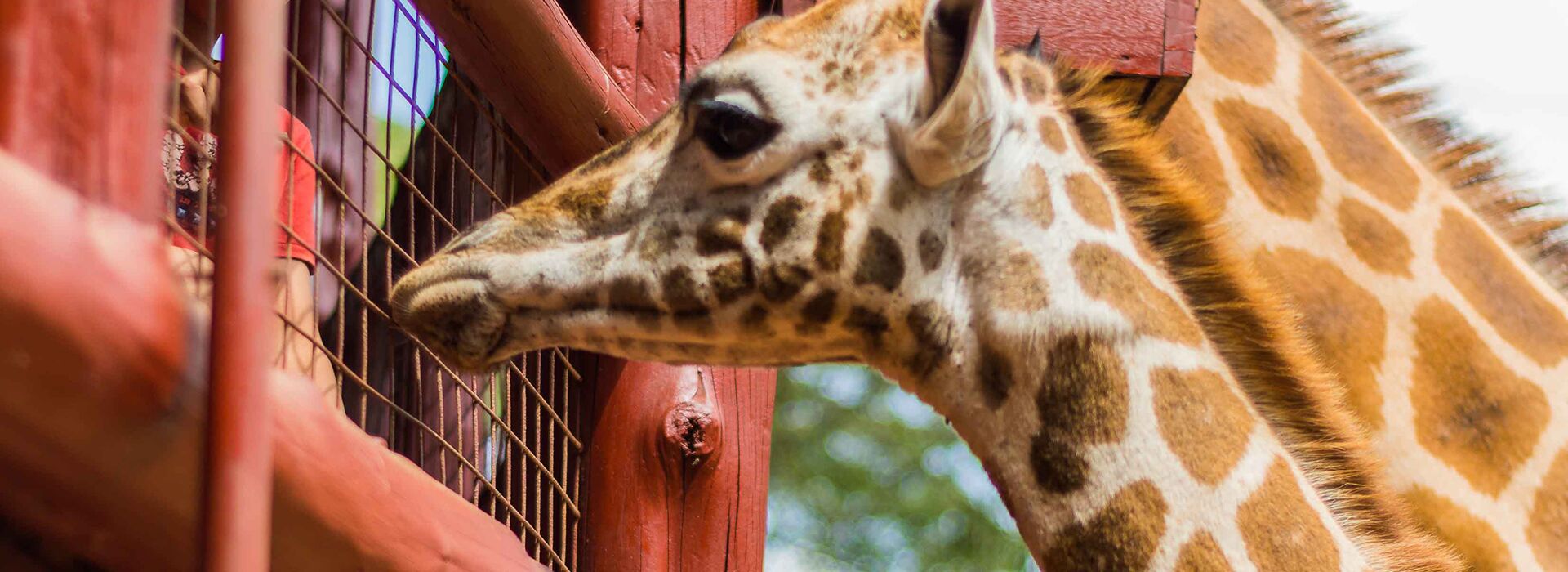
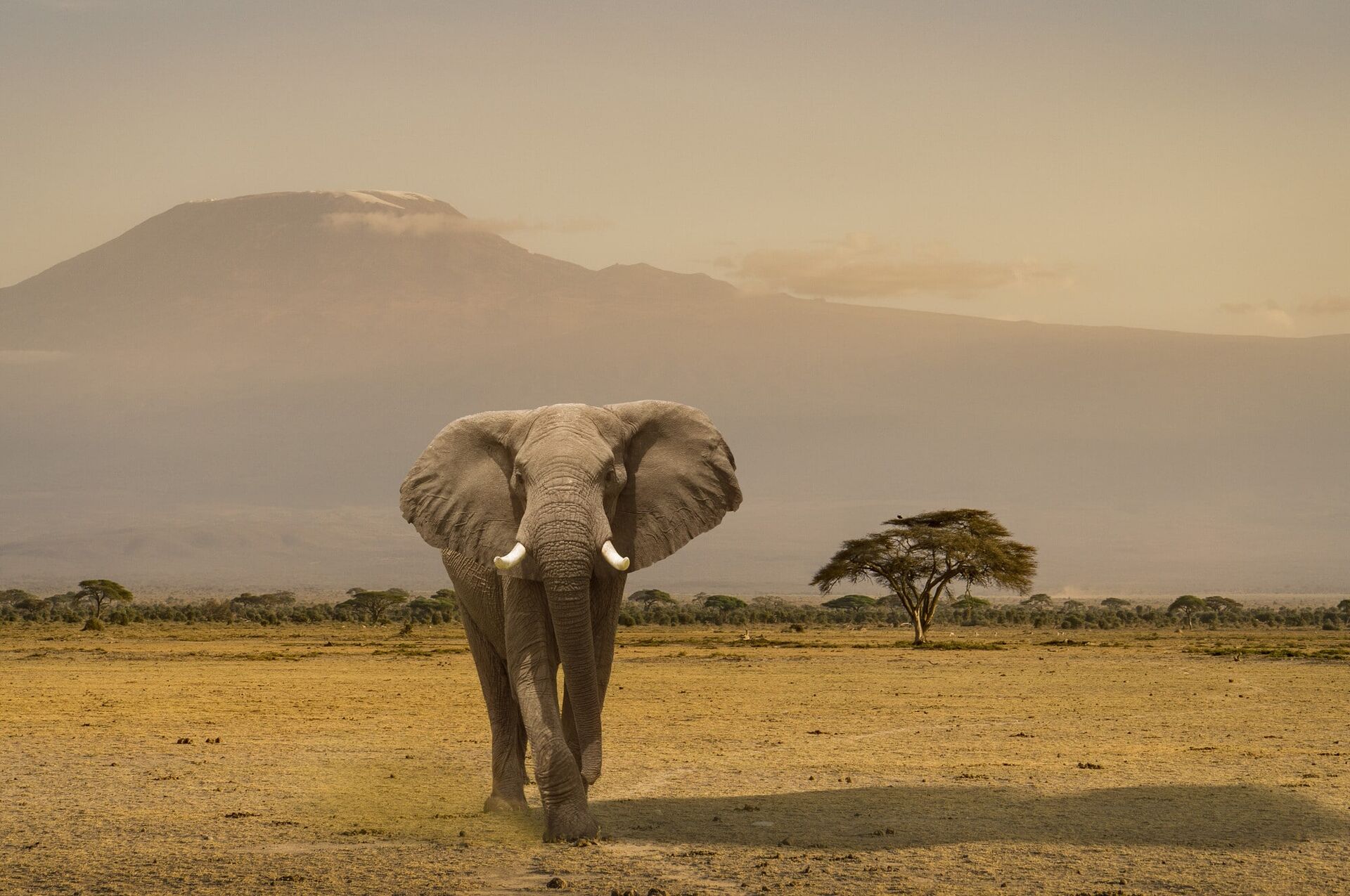
About four hours south through dry Maasai rangeland, Amboseli National Park opens out ahead of you, flat and dusty, with Kilimanjaro rising more than four kilometres above the plain just across the Tanzanian border. Clouds often wrap the summit by midday, so the classic views come at dawn and dusk. Your afternoon game drive heads for the swamps, where spring water filtered down from the mountain keeps the grass green and elephants stand belly-deep in it, while pelicans and egrets work the shallows. As the sun sets, the cloud may lift to reveal the snowy dome you'll be standing on in a week's time.
Elephants and a Mountain Preview
Out at first light to catch the mountain clear of cloud, its glaciers flushed pink at dawn. Amboseli's elephants, family herds led by big-tusked matriarchs, are among the most closely studied in Africa, and you spend the morning watching them move between swamp and dust. Late morning you climb Observation Hill, a short walk to a view across swamps and plains and a gentle loosener for your legs. From the top, your guide points out the mountain's three volcanic cones and explains how your route circles round to the south side. The afternoon is for resting, then a final drive among buffalo, wildebeest, hyenas and, with luck, lions.
Across Namanga to Arusha
After breakfast you drive about ninety minutes to the Namanga border, clear immigration on both sides at the shared border post, and meet your Tanzanian team. Another two hours brings you to Arusha, a lively town at the foot of Mount Meru. In the afternoon your mountain guide arrives for a full briefing and kit check, laying everything out on the floor, from thermal layers to water purification tablets, and any rental items are fitted on the spot. Park rules cap what each porter carries, so your duffel for the mountain must stay under 15 kg. Everything else stays in secure storage in Arusha until you come down.
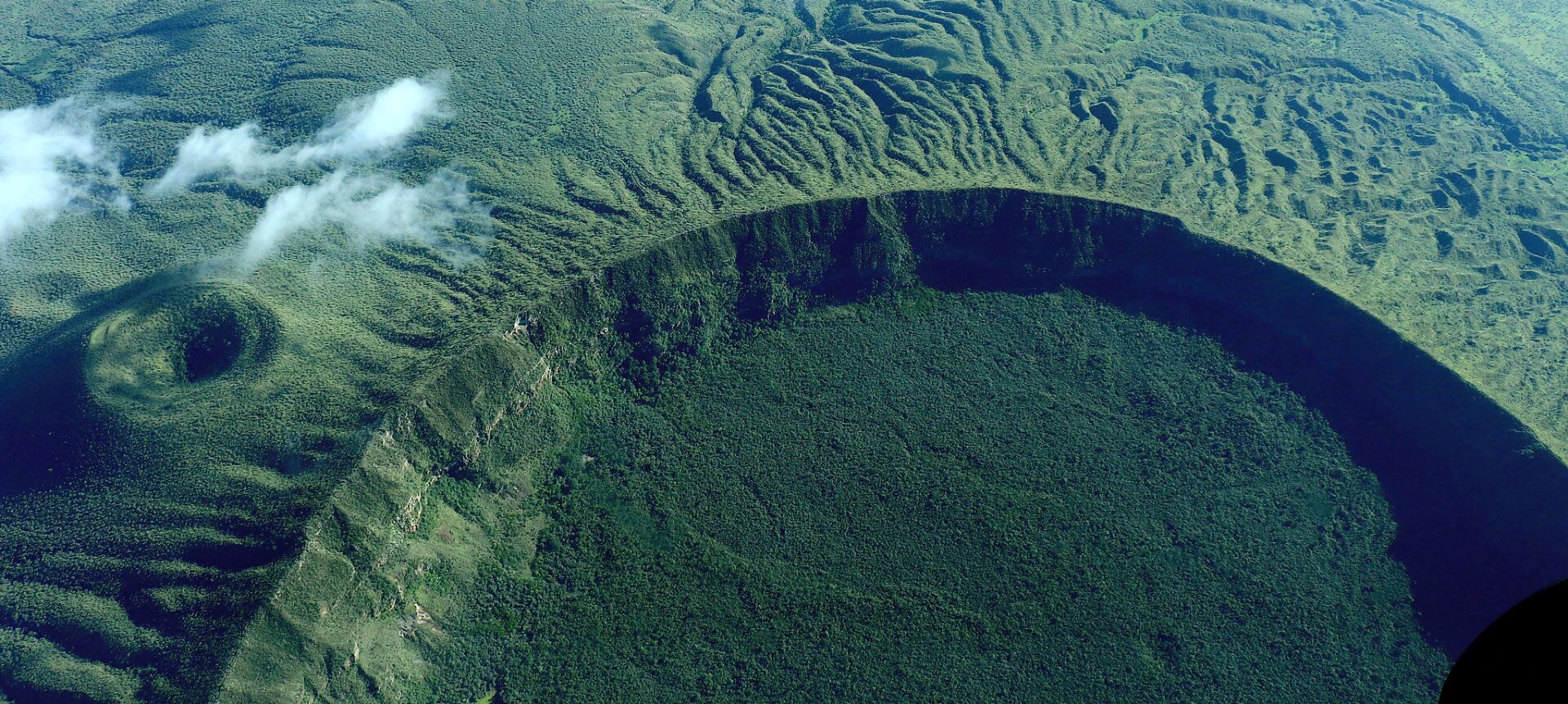
Machame Gate to Machame Camp
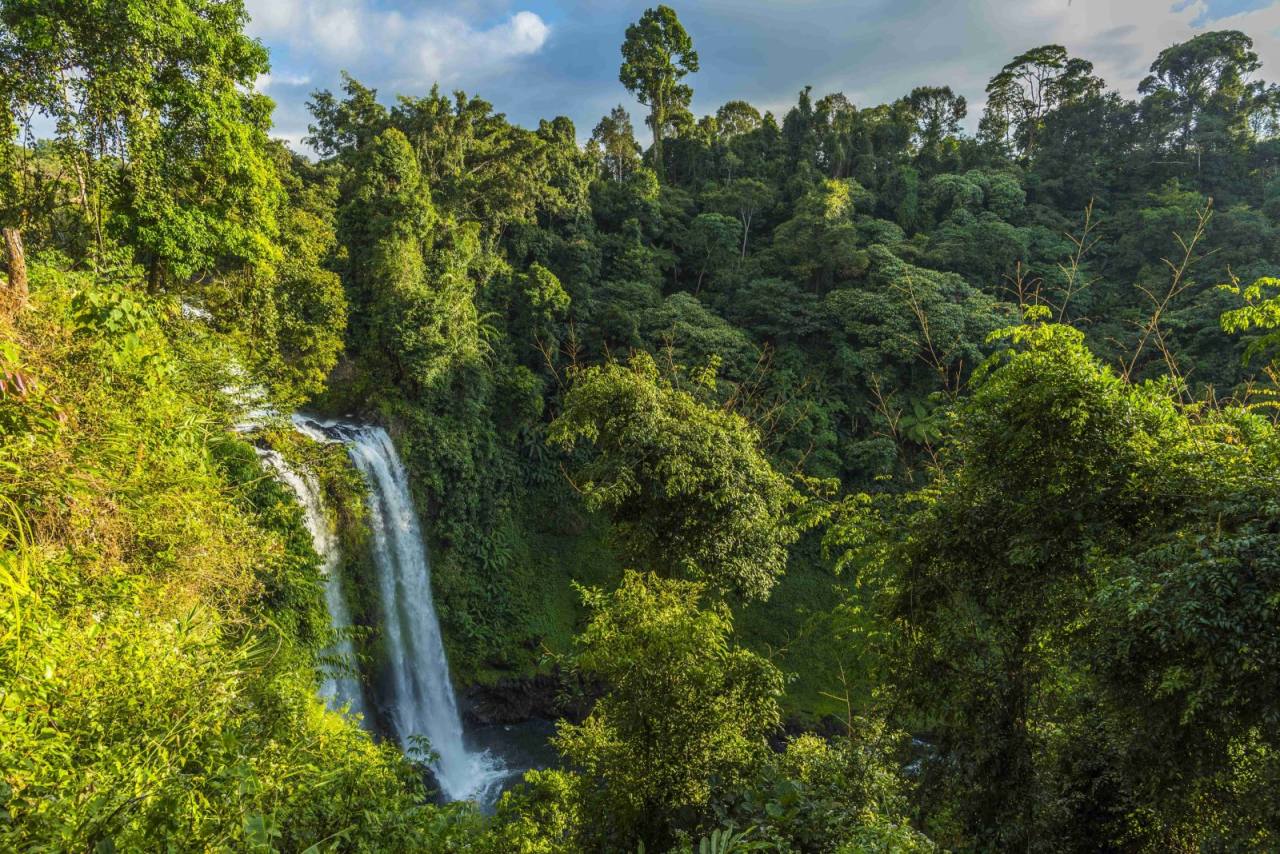
A drive of about an hour and a half brings you to Machame Gate (about 1,800 m), where your crew weighs the loads and registers with the park. Then you walk, gently at first, on a trail through tall, dripping rainforest where black-and-white colobus monkeys leap overhead and lichen hangs like grey beards from the branches. 'Pole pole', slowly, slowly, is the rule you'll hear a hundred times. After five to six hours and a climb of roughly 1,200 metres, the trees shrink to heather and you reach Machame Camp (about 3,000 m), where your tents are pitched and hot tea and popcorn are waiting.
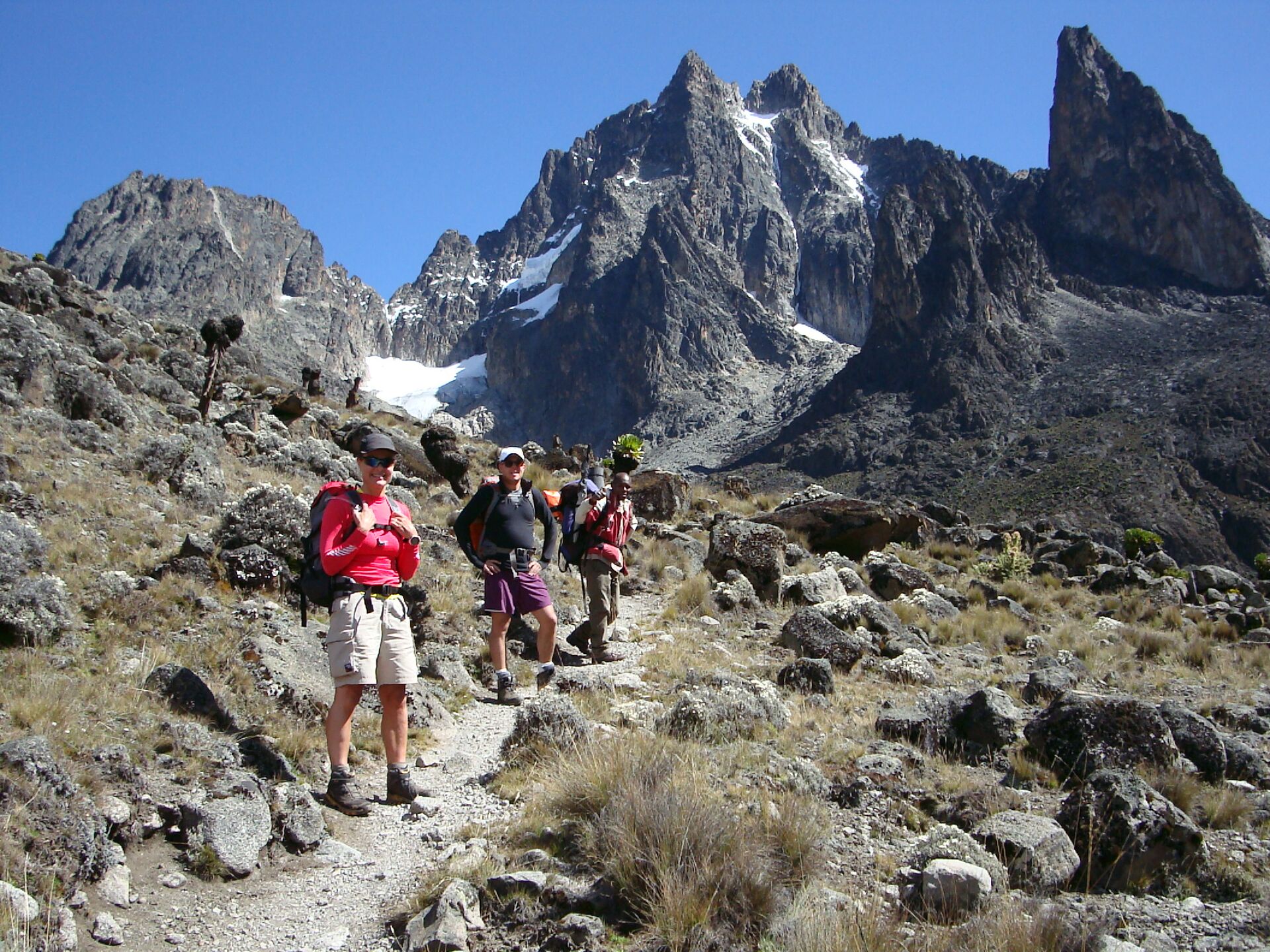
Onto the Shira Plateau
Above the forest the trail climbs steeply through giant heather and over rocky ridges, with the first open views of Kibo's glaciers ahead. You gain about 800 metres in five or six hours before the path levels onto the Shira Plateau, a high moorland left by the oldest and most eroded of Kilimanjaro's three volcanic cones. Shira Camp sits at about 3,800 m, cold at night and often clear enough at sunset to see Mount Meru floating above the clouds to the west. At dinner your guide clips a small monitor to your finger to check your pulse and oxygen level, as he will morning and evening from now on.
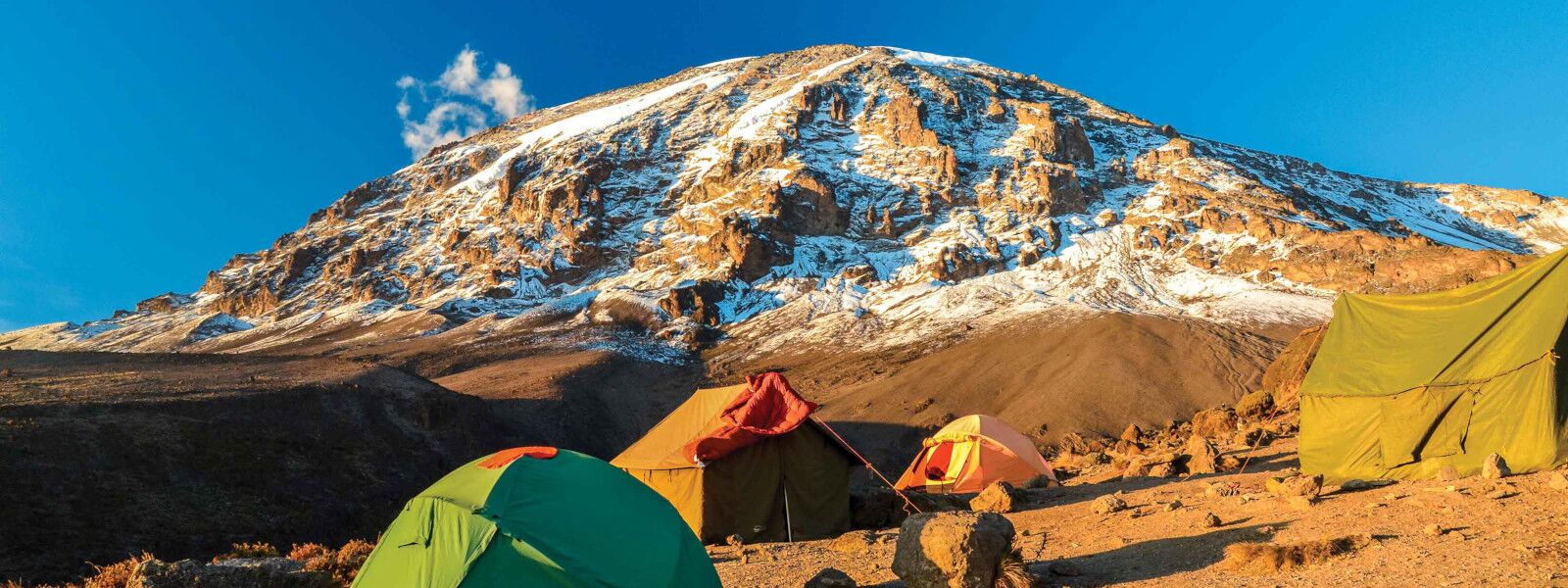
Climb High, Sleep Low
This is the day that does most of the acclimatisation work. You climb steadily east across an alpine desert of rock and sparse grass to the Lava Tower, a dark volcanic plug at about 4,600 m, where you stop for lunch. Many people feel the altitude here for the first time: a dull headache, shortness of breath, thoughts moving a little slower. Then you descend around 650 metres into the Barranco Valley, past giant groundsels and lobelias that grow only on East Africa's high mountains, to camp at about 3,950 m. Sleeping lower than your high point helps your body adjust. Look up from camp: the Barranco Wall is tomorrow morning's first job.
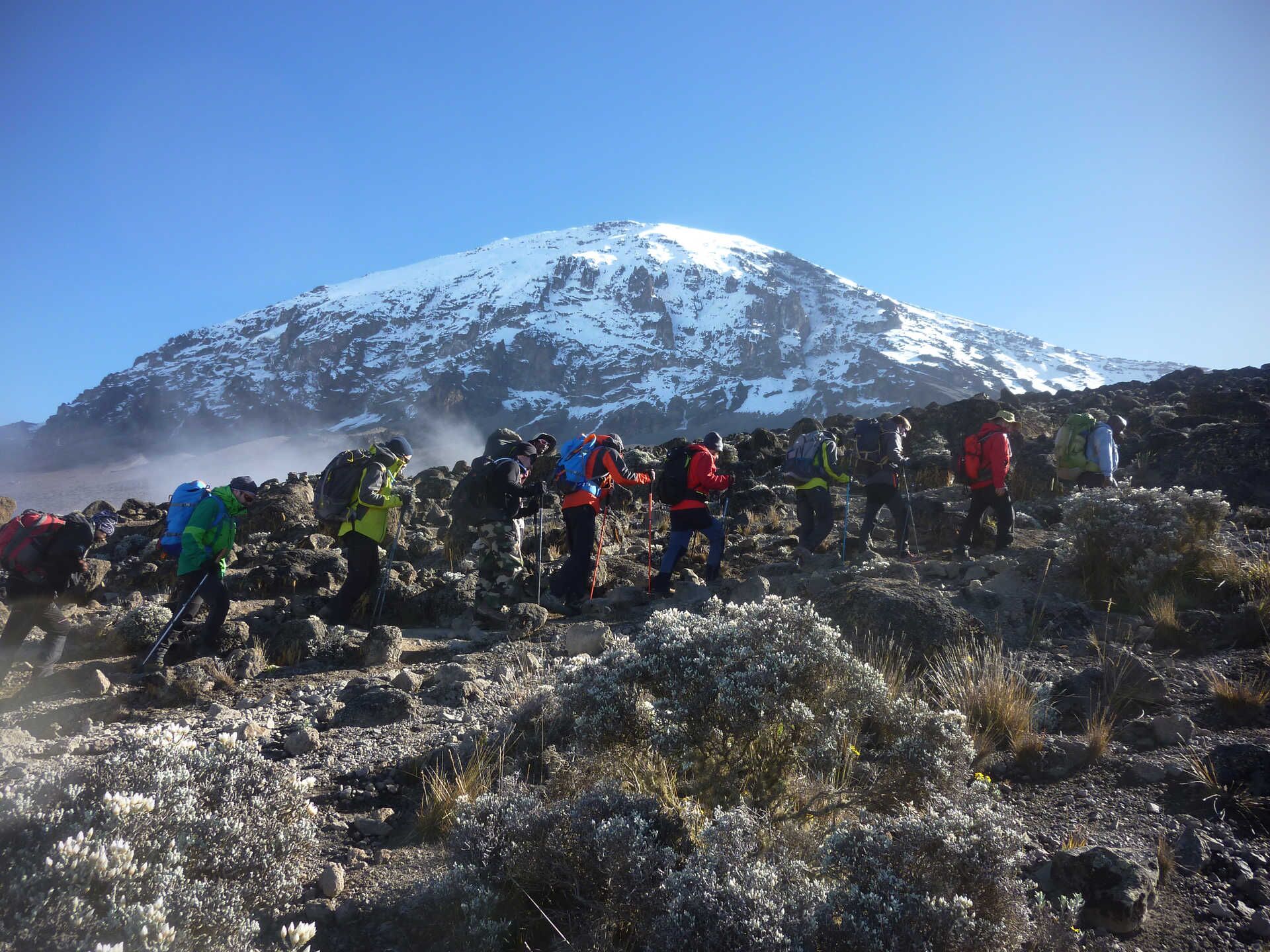
The Wall, Karanga and Barafu
Straight after breakfast you tackle the Barranco Wall, a steep scramble of about 250 metres where you'll use your hands on the rock in places. It looks intimidating from below, but the path is well worn and your guides are beside you at every awkward step. From the top the trail rolls over ridges and valleys to Karanga, the last water point on the route, where you stop for lunch. The afternoon climb to Barafu Camp (about 4,670 m) is steep, stony and exposed to the wind. Eat as much as you can at an early dinner, lay out your summit clothes, then sleep until around 11 pm.
Summit Night: Uhuru Peak, 5,895 m
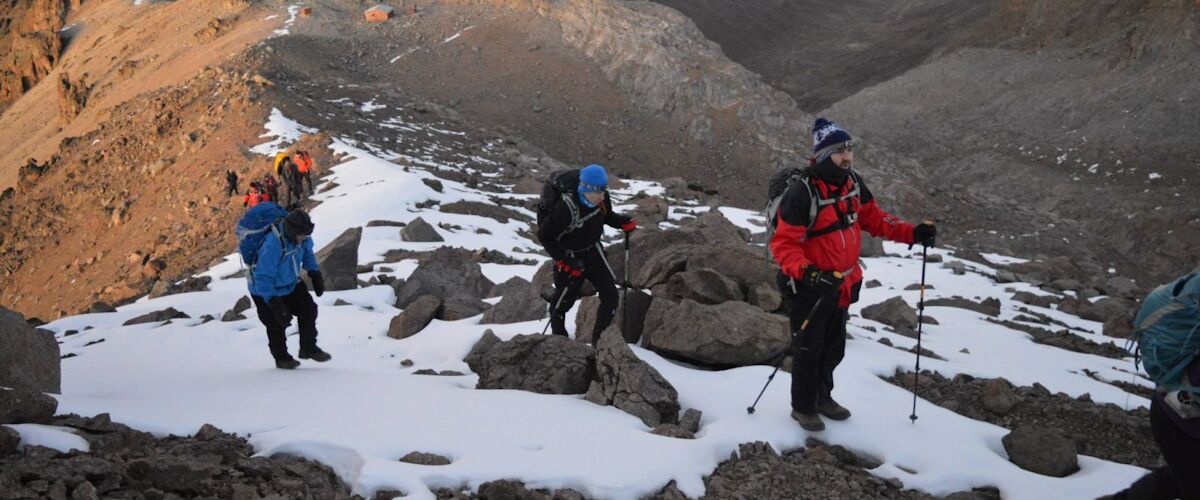
You are woken near midnight with hot tea and biscuits, then begin the long climb in the dark, one slow step at a time on a zigzag path of scree, your head torch lighting a small circle around your boots. It is cold, often well below freezing, and the hours seem endless. Around dawn you reach Stella Point on the crater rim (about 5,750 m), and the sunrise over Mawenzi brings new strength. Another hour along the rim, past walls of glacier ice, takes you to Uhuru Peak, 5,895 m, the highest point in Africa. Photos, hugs, perhaps tears, then you descend to Barafu for a rest and continue down to Mweka Camp (about 3,100 m).
Down Through the Forest
With thicker air in your lungs, you sleep better than you have in days. A walk of three to four hours descends through the rainforest, slippery after rain, to Mweka Gate (about 1,650 m), where you sign out of the park and collect your summit certificate. This is also the moment to thank your crew, and the farewell is often a song-filled send-off. Your vehicle then takes you back to Arusha for the first hot shower in a week, a proper bed and a long afternoon of doing absolutely nothing. If your legs ask for it, a massage can be arranged in town.
Tarangire's Elephants and Baobabs
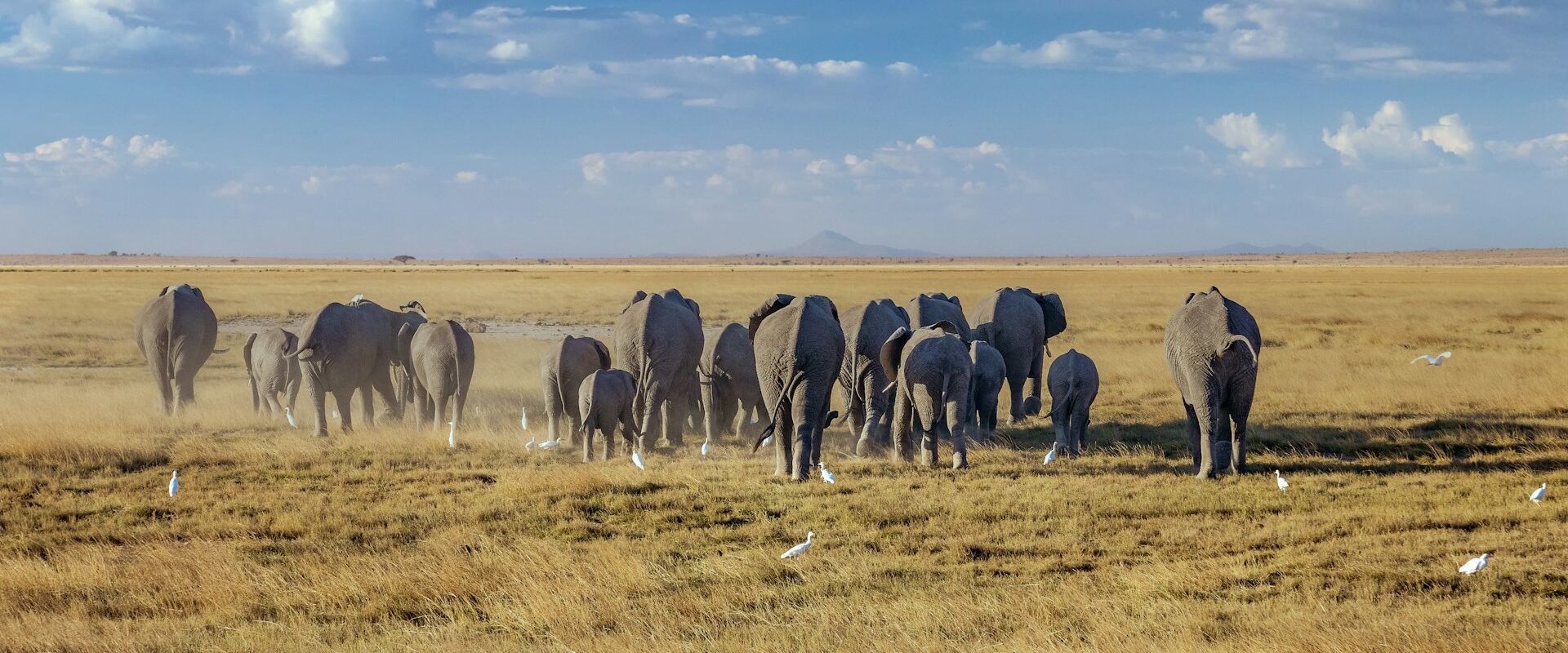
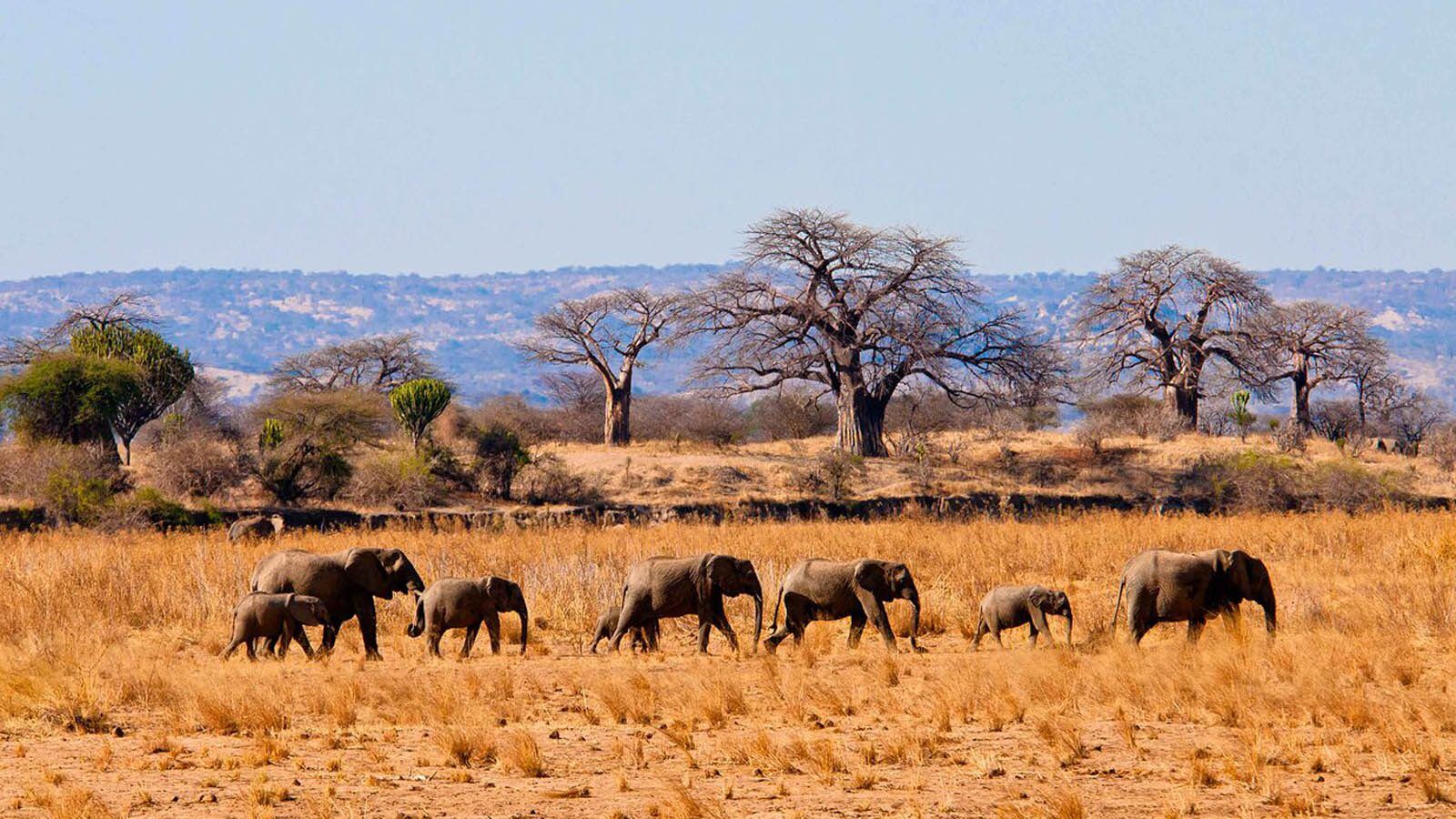
A late start and a relaxed two-hour drive bring you to Tarangire National Park, where the only exertion asked of you is lifting binoculars. In the dry season the Tarangire River draws hundreds of elephants, with herds digging into the sandy bed for water and calves rolling in the dust. Enormous baobabs stand over the grass like grey stone pillars, and the bush hides lions, leopards and flocks of yellow-collared lovebirds. After a picnic lunch you continue for about two and a half hours into the cool, green highlands of the Ngorongoro Conservation Area, reaching the crater rim in time for dinner and a fire.
Dawn in the Ngorongoro Crater
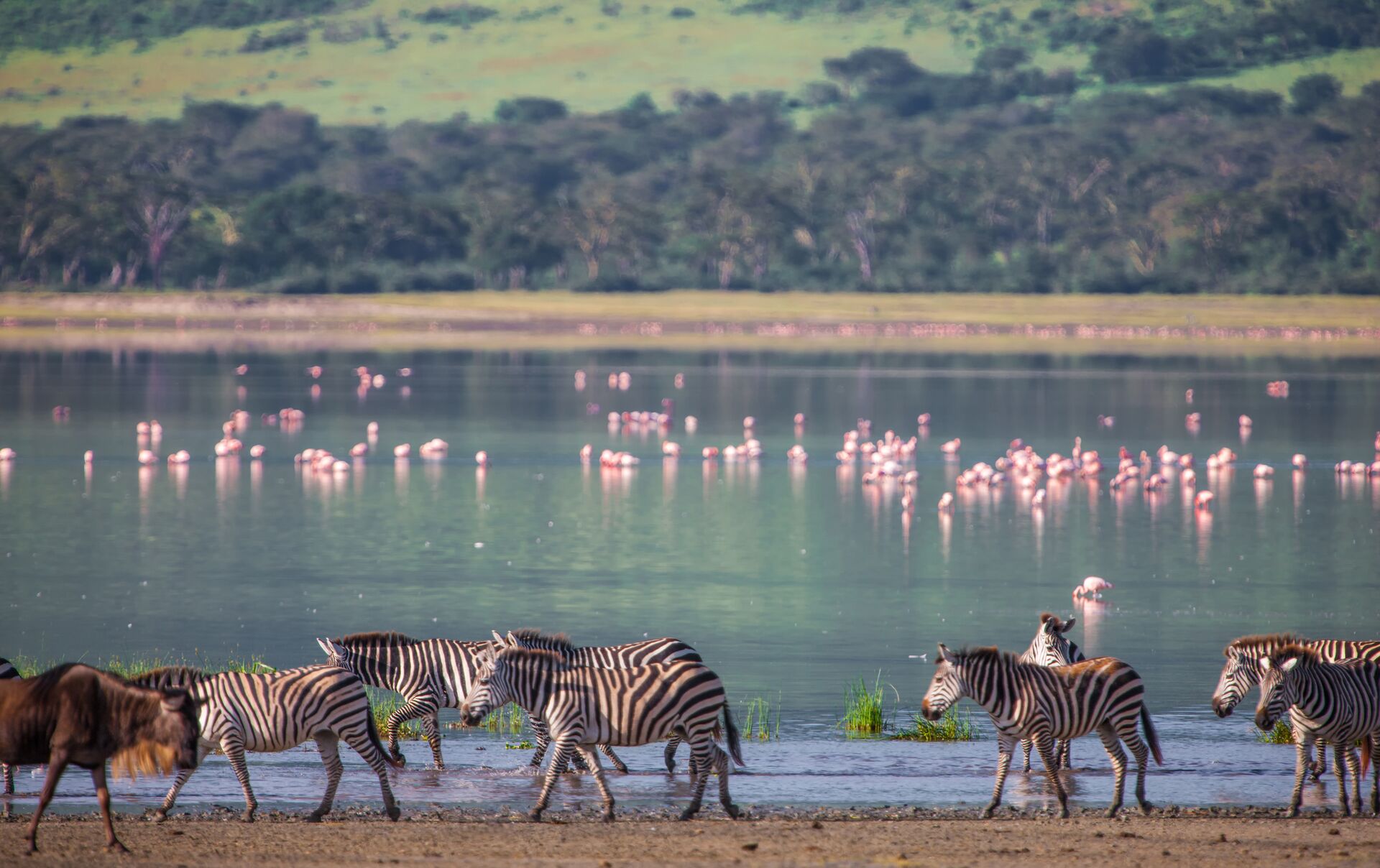
You drive down into the crater as the mist lifts off the rim, into a sunken world about 260 square kilometres across, ringed by walls some 600 metres high. The animals here have little reason to leave: lions sprawl in the grass, hyenas trot along the lakeshore, buffalo and zebra graze, and the black rhino, one of the hardest animals to see in Tanzania, may appear in the open. Flamingos often line the soda lake. After a picnic lunch by the hippo pool, you climb out and drive about three hours back to Arusha for a farewell dinner and a last night in Tanzania.
Kwa Heri, Kilimanjaro
A slow breakfast with no alarm clock, and perhaps a stroll to buy Tanzanian coffee or a painting to take home. Depending on your flight time, you may have the morning to explore Arusha's markets or simply sit in the garden sorting through your summit photographs. Your guide then drives you about an hour east to Kilimanjaro International Airport. If the clouds allow, look out of the window after take-off: the mountain will be right there, its summit glinting above the plains, and this time you will know exactly what it feels like to stand on top.
Your route
The parks, lakes and towns you'll travel through, in order.
What's included
Prices
Book as a group and the saving is applied to your quote.
Rates are per person per day, sharing a room, and cover everything under what's included. Your tailored quote confirms the final price for your dates. International flights are not included.
Frequently asked questions
How fit do I need to be to climb Kilimanjaro?
What is altitude sickness and how is it managed?
What are my chances of reaching the summit?
Is there a minimum age, and when is the best time to climb?
How does the Namanga border crossing work?
How long is the 13 Days Kilimanjaro Climb & Safari?
How much does the 13 Days Kilimanjaro Climb & Safari cost?
When is the best time to do the 13 Days Kilimanjaro Climb & Safari?
What is included in the 13 Days Kilimanjaro Climb & Safari?
Can this itinerary be customised?
Let's plan your safari
13 Days Kilimanjaro Climb & Safari · 13 days
Tell us when you'd like to travel and who's coming. A Geob safari specialist in Nairobi will reply within one working day with availability, a tailored quote and any changes you'd like.
- No account or payment needed to enquire
- Every itinerary can be adjusted to your dates and pace
- Prefer to talk? +254 728 136 167
You might also like
9 days
9 Days Maasai Mara & Lake Natron Walking Safari
Track with Maasai guides, sleep out in a fly camp and hike down into Empakaai Crater
 10 days
10 Days Hell's Gate, Lake Natron & Serengeti Adventure
Cycle Hell's Gate, scramble a gorge and summit Ol Doinyo Lengai by headtorch for sunrise
 13 days
13 Days Kenya & Uganda Murchison Falls Safari
Raft the Nile's big rapids, walk with rhinos and climb beside Murchison Falls