
Kilimanjaro
africa's highest summit, climbed on foot from coffee farms to glacier ice
About Kilimanjaro
Kilimanjaro rises alone from the plains of northern Tanzania to 5,895 metres at Uhuru Peak, the highest point in Africa and the tallest free-standing mountain in the world. It is made of three volcanic cones, Shira, Mawenzi and the great dome of Kibo, and reaching the top needs no technical climbing skills, only stamina, patience and time to acclimatise.
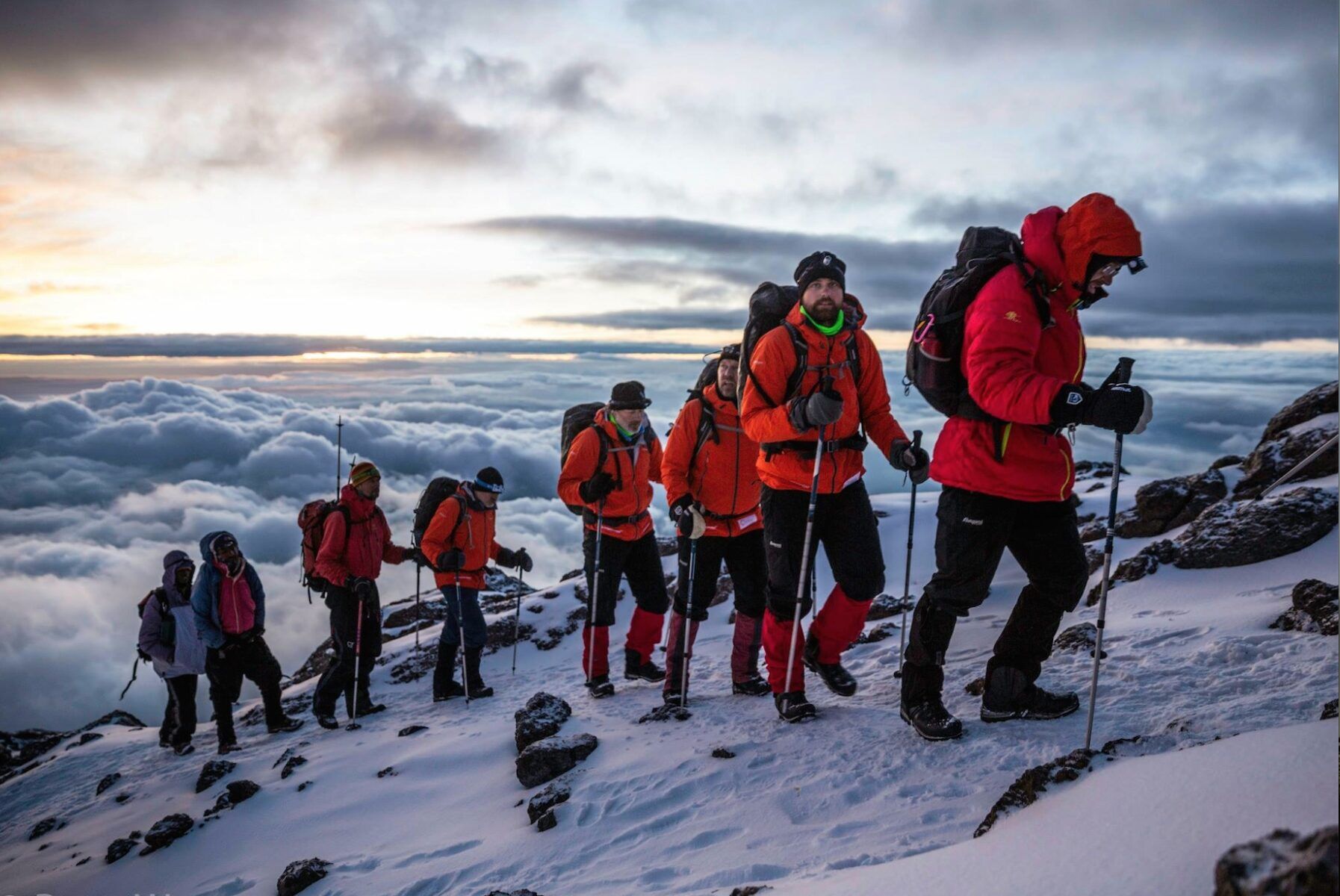
The climb is a journey through climate zones. You start among Chagga coffee and banana farms, walk into rainforest where colobus monkeys leap overhead, then out onto moorland of giant heather and groundsels. Above that comes alpine desert, bare and silent, and finally the summit push, which starts near midnight and reaches the crater rim as the sun rises behind Mawenzi and lights the shrinking glaciers. Machame and Lemosho are scenic and popular, Rongai approaches from the drier north near the Kenyan border, and Marangu offers huts instead of tents.
Allow seven or eight days on the mountain for the best chance of reaching the summit. The clearest, driest months are January to early March and June to October. Kilimanjaro International Airport, a short flight from Nairobi, puts you close to the trailheads near Moshi, and a safari in Tarangire, Ngorongoro or the Serengeti, or a few days in Zanzibar, makes a well-earned finish. Tanzania requires its own e-visa.